Showing posts with label Legendary Trees. Show all posts

Sunday, April 13, 2014

Jacqueline Fernandez Verve India Magazine Shoot Photos

Gorgeous Jacqueline Fernandez Verve India Magazine Shoot Photos. Look at her spicy stills from the shoot.
007

Tuesday, July 17, 2012

Who Wants To Live Here................. ? (SHARE) :D


Who Wants To Live Here................. ? (SHARE) :D

Wednesday, April 25, 2012

Do Tomatoes Grow On Trees ?


Tomato tree became a real find for those gardeners who love to experiment. This is a very unusual hybrid with great energy of growth, and it is not a simple tomato, but a tomato tree. That tree can grow, if you cultivate a tomato for a long time - up to 1.5 years.  02 more images after the break...

Thursday, July 14, 2011

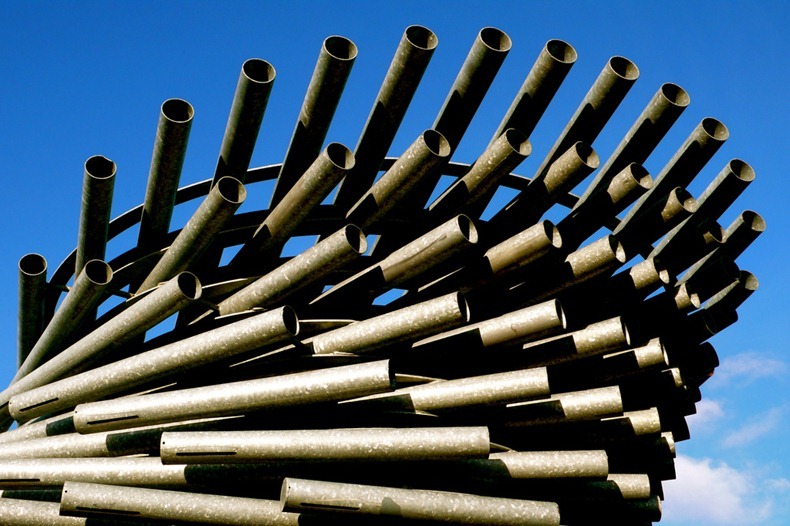
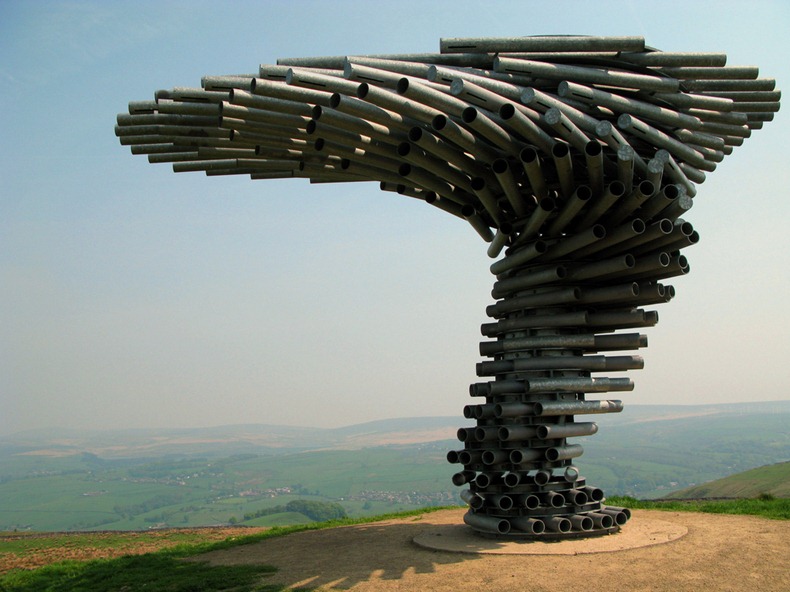
The Singing Ringing Tree at Burnley

The Singing Ringing Tree is a unique wind powered sound sculpture resembling a tree set in the landscape of the Pennine mountain range overlooking Burnley, in Lancashire. Designed by architects Mike Tonkin and Anna Liu of Tonkin Liu, the Singing Ringing Tree is a 3 meter tall construction comprising pipes of galvanised steel which harness the energy of the wind to produce a low and mellow hum. The harmonic and singing qualities of the tree were produced by tuning the pipes according to their length by adding holes to the underside of each.

Completed in 2006, it is part of the series of four sculptures within the Panopticons arts and regeneration project created by the East Lancashire Environmental Arts Network.
singing-tree5

singing-tree1
singing-tree3
singing-tree4
singing-tree7
singing-tree2

Friday, July 1, 2011

Massive Tree House in Crosville, Tennessee: The Largest in The World

A Crossville, TN (US) minister named Horace Burgess owns the largest tree house in the world. It rises 97 feet into the sky, the support provided by a live, 80-foot-tall white oak 12 feet in diameter at its base. Six other trees brace the tower-like fortress. It has some 80+ rooms and dozens of porches, overlooks, nooks and stairways. Built from scrap wood, the site stands in a rural area, but is attracting people from all over the country.

Monday, May 23, 2011

World's Thorniest Trees!

Even a brief look at these remarkable trees would make you say "Ouch!" and feel uncomfortable! These are some of the world's thorniest trees. Resist the urge to touch them!
World's Thorniest Trees!
What is so threatening about them that we feel subjected to a fear of pain just by looking at them?


World's Thorniest Trees!

World's Thorniest Trees!

World's Thorniest Trees!

World's Thorniest Trees!

World's Thorniest Trees!

World's Thorniest Trees!
So admire them from a distance, and resist the urge to touch.

Wednesday, May 18, 2011

Nature in Funny Mood

Check out these pictures of trees and you would definitely say - Nature was in Funny Mood when it created these tress.
Naughty Tree

Naughty Tree
Naughty Tree
Naughty Tree
Naughty Tree
Naughty Tree
Naughty Tree
Naughty Tree
Naughty Tree
Naughty Tree
Naughty Tree
Naughty Tree
Naughty Tree

Saturday, April 23, 2011

Jabuticaba - A Tree that Fruits on its Trunk

Jabuticaba – The Tree that Fruits on its Trunk

Jabuticaba - A Tree that Fruits on its Trunk
No, this is not a belated April Fool’s prank. They look as if they may have been pinned there by an overenthusiastic gardener to impress the neighbors, but the fruit of the Jabuticaba really does grow off the trunk of the tree.

Friday, April 8, 2011

Saturday, April 2, 2011

Trees Cocooned in Spider Webs After Pakistan Flood [Must See]

An unexpected side-effect of the flooding in parts of Pakistan last year has been that millions of spiders were driven up into the trees to escape the rising flood waters. Because of the scale of the flooding and the fact that the water has taken so long to recede, spiders have built massive webs on trees turning them into ghostly cocoons. Such a phenomenon has never been seen before.
tree-cocoons4

Sunday, December 19, 2010

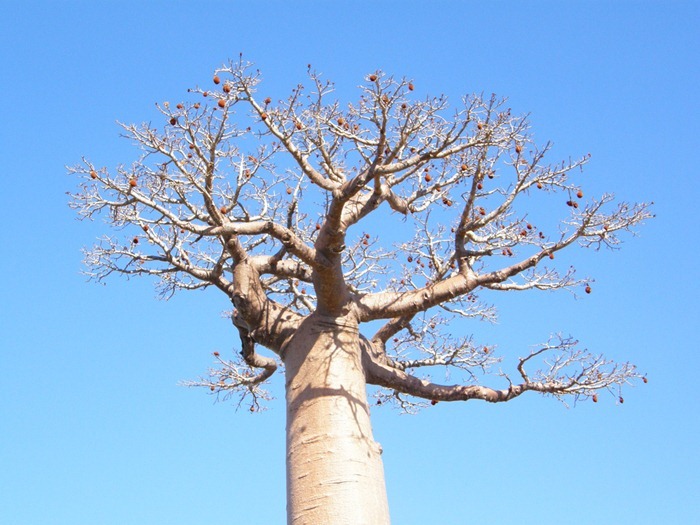
Baobab: The Upside-Down Tree

Adansonia digitata, or Baobab tree is a strange looking tree that grows in low-lying areas in Africa and Australia. The Baobab is also called the upside-down tree because when bare of leaves, the spreading branches of the Baobab look like roots sticking up into the air, as if it had been planted upside-down. Legend holds that god Thora took a dislike to the Baobab growing in his garden, so he threw it out over the wall of Paradise on to Earth below, and although the tree landed upside-down it continued to grow. Another story goes that when the Baobab was planted by God, it kept walking, so God pulled it up and replanted it upside down to stop it moving.
baobab (3)

The Baobab can grow to enormous sizes reaching heights of 5 to 30 meters and have trunk diameters of 7 to 11 meters. One African Baobab specimen in Limpopo Province, South Africa, is often considered the largest example alive. Up to recent times the tree had a circumference of 47 meters - its diameter is estimated at about 15.9 meters. Recently the tree split up into two parts and it is possible that the stoutest tree now is Sunland Baobab, also in South Africa with a diameter of 10.64 m and approximate circumference of 33.4 meters. Baobabs are also reputed to be many thousands of years old.
The baobab is highly regarded by African people because all of its parts can be utilized in some capacity. In addition to being an important source of timber, the trunks are often hollowed out by people who use them for shelter, grain storage or as water reservoirs. The hollowed trunks also serve as burial sites. Some of the most important products come from the bark of the tree, which contains a fiber that is used to make fishnets, cords, sacks and clothing. The bark can also be ground into a powder for flavoring food. The leaves of the baobab were traditionally used for leaven but are also used as a vegetable. Its fruits and seeds are also edible for humans and animals. The pulp of the fruit, when dried and mixed with water, makes a beverage that tastes similar to lemonade. The seeds, which taste like cream of tartar and are a valuable surce of vitamin C, were traditionally pounded into meal when other food was scarce. Other products such as soap, necklaces, glue, rubber, medicine and cloth can be produced from the various parts of the baobab tree.
baobab (4)
baobab (5)
baobab (6)
baobab (1)
baobab (2)
The fruit of Baobab broke open.

Wednesday, November 3, 2010

Ancient giants (14 photos)

Huge redwoods of California - the largest trees in the world and one of the most ancient. These trees can reach heights of 76 meters (25-storey building), and their diameter at the level of human breast reaches 9 meters. General Sherman tree in Sequoia National Park is 1,478 cubic meters, equivalent to 21,800 68-kilogram men! These giants of about 3000 years. The oldest is currently a giant sequoia has an age of 3500 years.

Tuesday, November 2, 2010

Socotra Island - The Most Bizzare Place on Earth

Socotra Island
Socotra is a small Yemeni archipelago of four islands and islets in the Indian Ocean off the coast of the Horn of Africa, about 350 kilometers south of the Arabian peninsula.

Socotra is one of the most isolated landforms on Earth of continental origin.

The archipelago features narrow coastal plains, a limestone plateau with caves, and mountains which rise to 1,525 meters above sea level.

Like the Galapagos Islands, this island is teeming with 700 extremely rare species of flora and fauna, a full 1/3 of which are endemic, i.e. found nowhere else on Earth.

Wednesday, October 27, 2010

The Unusual Baobab Trees (10 pics)

The Unusual Baobab Trees
Baobab or Upside-Down Tree grows in Africa and Australia. The legend says that after it was planted by God it kept moving, so God replanted it upside down. These trees can reach heights of 5 to 30 metres (16 to 98 ft) and have trunk diameters of 7 to 11 metres (23 to 36 ft).